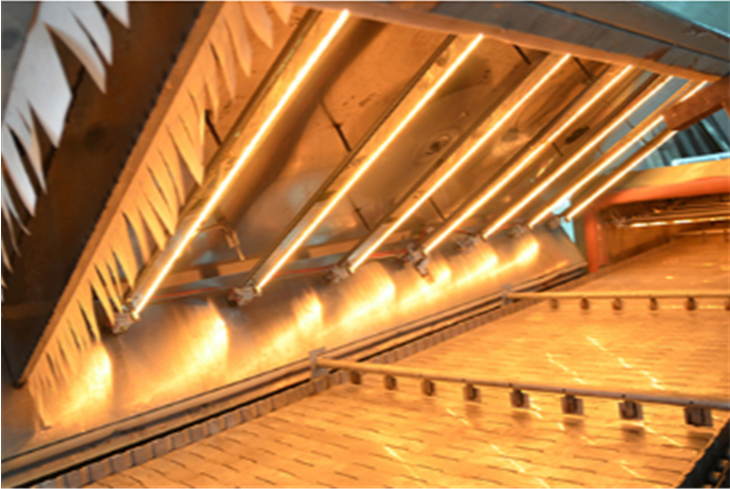
When the line is moving and the crust needs to hit the stone hearth with consistent color, heat delivery isn’t up for debate. In deck ovens and rotary ovens, a heating element that’s slow to respond stretches bake times, and that shows up as uneven caramelization, soft spots, and dough you just end up throwing away.
What actually matters, technically
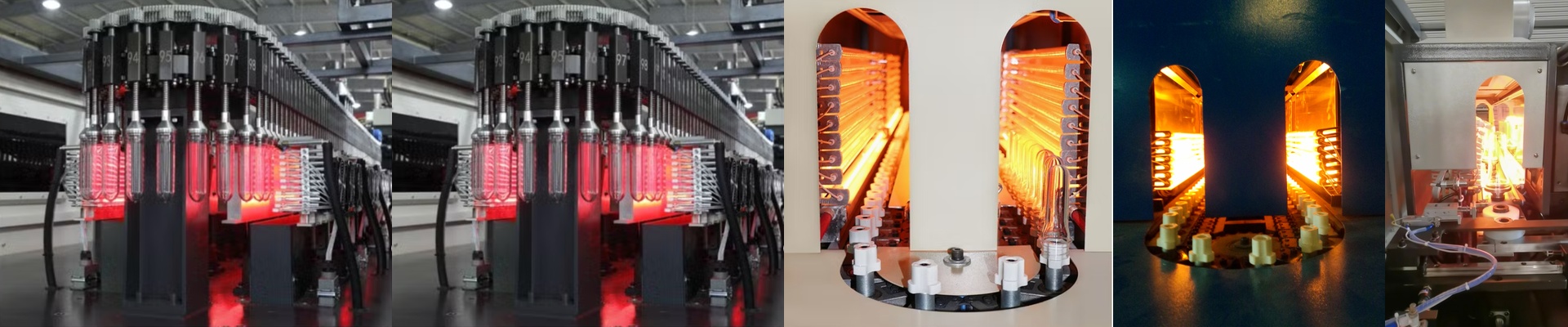
A food-service ruby halogen bulb is a quartz-encased, tungsten-filament infrared emitter built for fast, controllable heat. The ruby tint filters part of the spectrum—cutting glare while delivering strong short-wave output that penetrates the top of the dough and drives browning quickly. Ratings typically run 240–2400 W, with 120 V, 208 V, or 240 V options, and standard bases like G9, GY6.35, or R7S so you can match what your oven already uses. And the response is quick—full output in seconds—so the oven recovers fast after you open the door and during rush.
Why this works where you need it
In a deck oven, the bulb hits the top of the product while the stone hearth holds steady bottom heat. That gives you control over crust set and leoparding without drying things out. In a rotary oven, the quick-on heat stabilizes the baking chamber fast after loading, so every tray gets the same exposure. The result is fewer underdone centers, fewer over-browned edges, and a bake window you can repeat shift after shift. Plus, the fast recovery shortens cycle time, and the focused output keeps the surrounding kitchen air cooler—better for staff comfort and easier on energy use.
The stuff you have to get right
These bulbs run hot, so clearance to dough, trays, and oven walls has to meet the manufacturer’s minimum distances. They’re not universal—verify socket type, voltage, and wattage against your oven spec before you order. Handle them with clean, dry hands or gloves. Any residue on the quartz can create hot spots and cut life short. Plan for proper shielding and thermal protection to meet local codes, and keep spares on hand. When you do, the line never has to wait for heat.