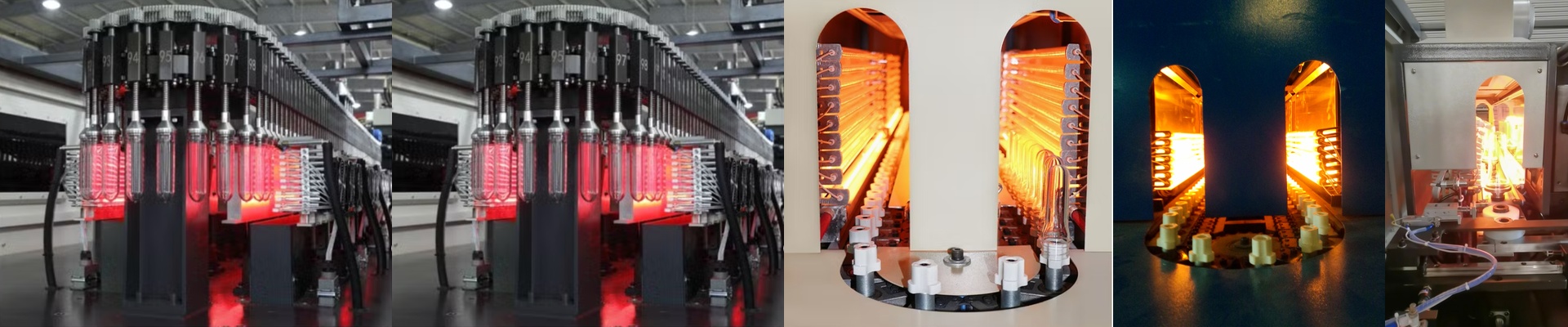
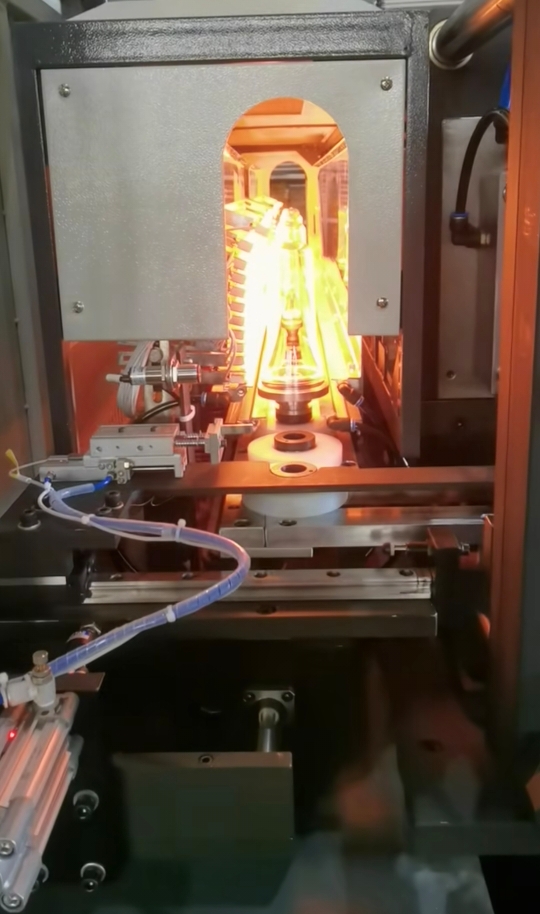
On the blow molding line, uneven preform heating quietly chews through margins. You see it in off-spec bottles, in the scrap pile, and in the sudden stops when the heating tunnel trips. Every minute of unplanned downtime costs. Every kilowatt wasted adds up. The root cause is straightforward: if the infrared profile isn’t stable across every preform, stretch blow molding can’t deliver consistent wall thickness or strength.
What matters under the hood
We build the heating system around repeatable, measurable performance. Short-wave quartz infrared emitters give you rapid response and tight spectral control, so the energy lands exactly where the preform needs it. Each emitter is matched to OEM voltage and wattage specs, with R7s connectors and standardized mounting for Sidel, Krones, SIPA, Husky, SACMI, and Nissei ASB blow molders. Reflector geometry and zone control keep the heating tunnel’s temperature spread within ±2°C across the preform array. The payoff is uniform heating from neck to base, faster recovery after jams, and fewer thermal overshoots.
Why this translates on the floor
When preform heating uniformity improves, the whole machine settles down. Cycle times stabilize because the stretch profile repeats, and you spend less time chasing rejects. Energy use drops as the system hits setpoint quickly and holds it without hunting. Maintenance gets easier too: fewer lamp changes, fewer alarms, and predictable inspection windows. In practice, 24/7 plants report fewer heating-related stops and measurably less scrap from wall thickness variation.
What you need to keep straight
Installation is straightforward, but the infrared profile has to be tuned to your preform geometry, color, and line speed. Clear PET behaves differently than pigmented, and thicker walls need adjusted dwell. Plan a short commissioning window to map zones and lock in settings. Also, keep reflectors clean and aligned; even a small drift throws off uniformity. We provide a calibration routine that keeps performance consistent over thousands of hours, and we match emitter geometry to your heating tunnel so you don’t have to rework the machine.