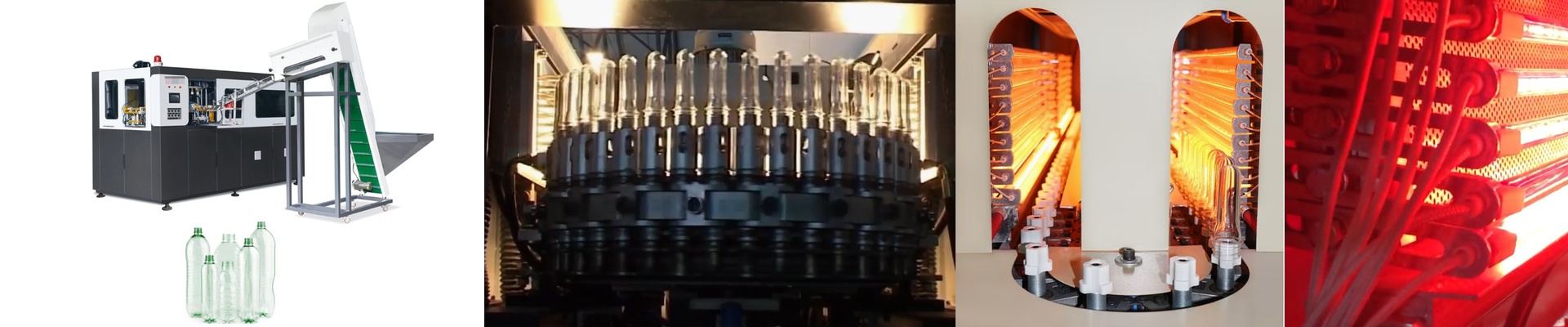
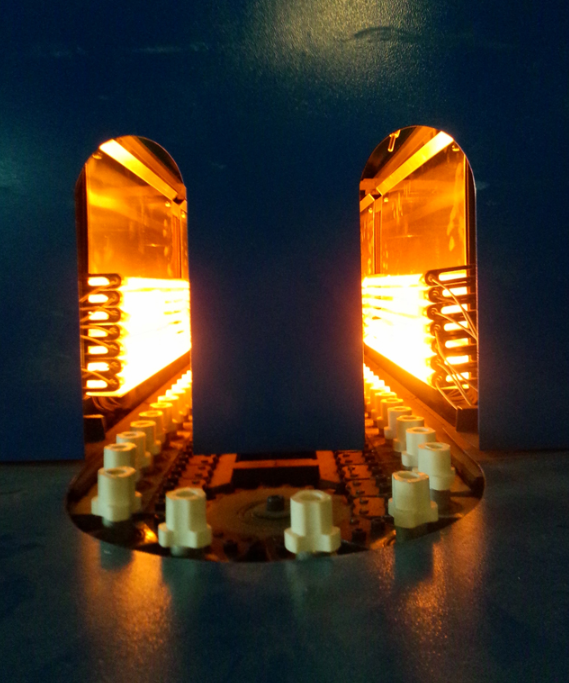
On the blow molding line, uneven preform heating is a one-way ticket to scrap and throttled cycle times. You need heat that gets through the PET wall evenly, quickly, without scorching the surface. That’s exactly why medium wave infrared heaters earn their keep in the heating tunnel. What matters, technically Medium wave infrared sits right in PET’s absorption band, around 2.5–3.5 μm. That gives you fast energy transfer and tight control over the temperature rise. The result is a clean, controllable heating curve that follows the preform geometry. We tailor power density and lamp geometry for each section of the heating zone, so the heat profile matches your preform wall thickness and cycle speed. This isn’t guesswork. It’s power matching and thermal layout engineered for repeatability. Why it works in practice Medium wave infrared warms up fast, holds steady output, and heats across the preform wall predictably. That means fewer weak spots, better bottle weight distribution, and more consistent stretch ratios in the mold. You get higher throughput with less energy per bottle, because the heat goes where it’s needed and nowhere else. The lamps run cooler at the surface while still penetrating deeply, so you cut hot spots and ease the load on the cooling system. What to watch for Installation is straightforward on most blow molders, but you have to match heater length, end cap type, and the electrical interface to the original OEM footprint. Expect a short tuning window to set the power curve and dwell time for your preform and material grade. Keep the reflectors clean and aligned. If the thermal field drifts, you’ll see it as uneven heating. When you spec them right, medium wave infrared heaters are a solid, dependable upgrade for consistent, high-yield blow molding.