
Why we basically try to torture our bathroom heaters
Let’s be honest: bathrooms are a nightmare for electronics. You’ve got thick steam, random water splashes, and temperatures that swing from freezing to boiling in minutes. If a single seal slips or a coating flakes off, the heater is toast. Or worse, it shorts out. We aren’t interested in guessing how long these things will last. Instead, we put them through “damp-heat aging tests.” Translation? We try to break them on purpose so they don’t break in your house.
The truth about those IP65 ratings
You’ll see “IP65” on the box, which is just a fancy way of saying it’s dust-tight and can handle a water jet. But here’s the thing: a seal that works on day one isn’t always a seal that works on day 500. The quartz tube and the metal housing expand and shrink every time you turn the heat on and off. Eventually, tiny, microscopic gaps open up. Moisture sneaks in. And once water hits the electrical terminals? You’re looking at corrosion or a nasty spark. To stop that, we lock our heaters in steam chambers for hundreds of hours. We’re hunting for any sign that the insulation is giving up. We’d much rather a fuse blow in our lab than have a unit fail inside your ceiling.
Fighting the “Heat-Cold” cycle
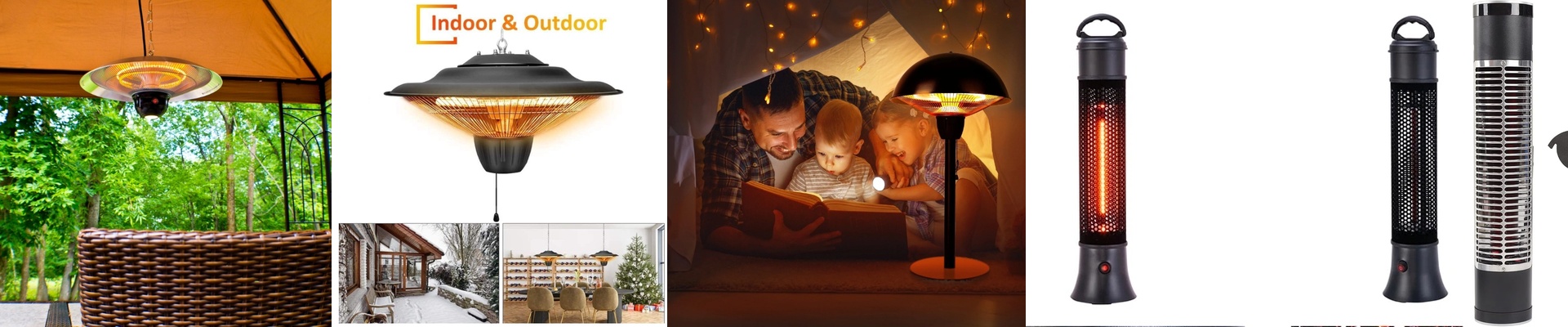
Infrared lamps get incredibly hot. That kind of heat eats away at rubber gaskets and makes silicone sealants brittle. Then, the moment you turn the heater off and the room cools down, condensation forms inside the housing. It’s a brutal cycle. So, we mimic it. We crank the lamp to max wattage, then blast it with a cold mist. It puts massive pressure on the bond between the glass and the waterproof seal. If that seal shrinks or cracks even a little, it fails. Simple as that.
The balancing act
Now, you might think, “Just seal it tighter!” But there’s a catch. If we seal the unit too tight, the heat gets trapped inside. The internal parts start cooking themselves, and the lamp dies way sooner than it should. It’s a bit of a balancing act. We design venting paths that are smart enough to block water but let the air breathe. That way, you get a heater that stays bone-dry without melting its own guts.